
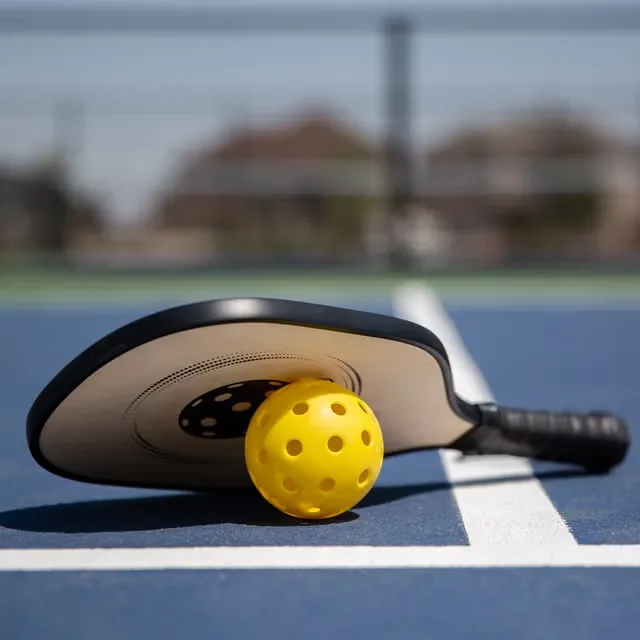
Choosing the right pickleball paddle can make a major difference in your comfort, control, and performance on the court. With so many shapes, materials, weights, grips, and surface textures available, finding the ideal paddle can feel overwhelming, especially for beginners. The best pickleball paddle is not necessarily the most expensive option. Instead, it should match your playing style, skill level, physical preferences, and goals. By understanding the most important features, you can confidently compare the best pickleball paddles and find one that works for your game.
Understand Your Playing Style
Before buying a paddle, think about how you normally play. Pickleball players generally have different approaches to the game. Some prioritize power and aggressive shots, while others focus on control, placement, and consistency.
If you like attacking from the baseline and hitting powerful drives, you may prefer a paddle designed to generate more power. Players who spend more time at the kitchen line may want better control and touch for dinks, drops, and resets.
Understanding your natural playing style is the first step toward choosing equipment that complements your strengths.
Choose the Right Paddle Weight
Weight is one of the most important factors when comparing pickleball paddles. Paddles generally fall into lightweight, midweight, and heavyweight categories.
Lightweight paddles can be easier to maneuver and may help players react quickly at the net. They can be particularly useful for players who prioritize speed and quick exchanges.
Midweight paddles offer a balance between power and control, making them a popular choice for many recreational players. Heavier paddles can provide additional stability and power but may require more effort to maneuver.
The right weight should feel comfortable throughout a full match without causing unnecessary fatigue.
Consider Paddle Shape
Paddle shape can influence reach, sweet spot size, and overall maneuverability. Traditional widebody paddles often provide a larger hitting area, which can be helpful for beginners and players who want forgiveness.
Elongated paddles generally offer additional reach and may appeal to players who want more leverage and court coverage. However, their narrower shape can require greater precision.
When considering the best pickleball paddles choose a shape that supports your preferred style and feels comfortable during practice.
Examine the Paddle Core
The paddle core plays an important role in how the paddle feels when striking the ball. Common core materials include polymer-based constructions and other engineered materials designed to balance power, control, and durability.
A softer-feeling core may appeal to players who prioritize touch and control, while a more responsive construction can suit aggressive players looking for additional power.
Consider how the paddle responds during different shots rather than focusing only on the material name.
Look at the Paddle Surface
The paddle's surface can influence spin and ball control. Many modern paddles use textured surfaces designed to help players generate spin.
Spin can be useful for serves, drives, drops, and other shots where ball rotation affects trajectory. However, surface texture should be considered alongside the paddle's core, shape, and weight.
Players who rely heavily on topspin or slice may want to pay particular attention to surface characteristics when comparing the best pickleball paddles.
Find a Comfortable Grip
A comfortable grip is essential because you may hold the paddle for an extended period. Grip size, circumference, length, and cushioning can all affect how the paddle feels in your hand.
A grip that is too large can make the paddle difficult to control, while one that is too small may feel unstable.
Whenever possible, test the paddle before buying. Take several swings and pay attention to whether your hand feels relaxed and secure.
Consider Power and Control
Power and control are two of the most important performance characteristics to evaluate. Power-oriented paddles can help aggressive players hit harder shots, while control-oriented paddles may provide greater precision.
Beginners often benefit from a balanced paddle that offers a combination of both characteristics. As your skills improve, you may develop a stronger preference for either power or control.
Think about the shots you use most often and select a paddle that supports them.
Check Durability and Construction
Durability is another important consideration. A paddle should be able to handle regular practice and competitive play without losing its performance characteristics quickly.
Examine the quality of the materials, edge guard, grip, and overall construction. If you play frequently, investing in a well-built paddle can provide better long-term value.
Proper storage and maintenance can also help extend the paddle's lifespan.
Consider Your Budget
Pickleball paddles are available at many price points. While premium models may include advanced materials and technologies, beginners do not necessarily need the most expensive paddle.
Instead, focus on finding a paddle with the right weight, shape, grip, balance, and playing characteristics. A reasonably priced paddle that matches your style can be more useful than an expensive model that feels uncomfortable.
Set a realistic budget and compare features within that range.
Test Before You Buy
If possible, try different paddles before making your final decision. Testing can help you understand how weight, balance, grip, and surface texture affect your performance.
Practice a variety of shots, including serves, drives, volleys, dinks, and resets. Pay attention to how naturally the paddle responds and whether you can maintain control.
Testing multiple options is one of the easiest ways to identify the paddle that feels right for your game.
Conclusion
Choosing the best pickleball paddle requires more than selecting a popular model. Your playing style, paddle weight, shape, core, surface, grip, power, control, durability, and budget should all influence your decision.
Players who prioritize quick reactions may prefer lighter paddles, while power-oriented players may enjoy heavier or more responsive designs. Those who focus on control may benefit from paddles that provide a softer, more precise feel.
By understanding your needs and testing different options whenever possible, you can find among the best pickleball paddles a model that improves comfort, confidence, and performance every time you step onto the court.