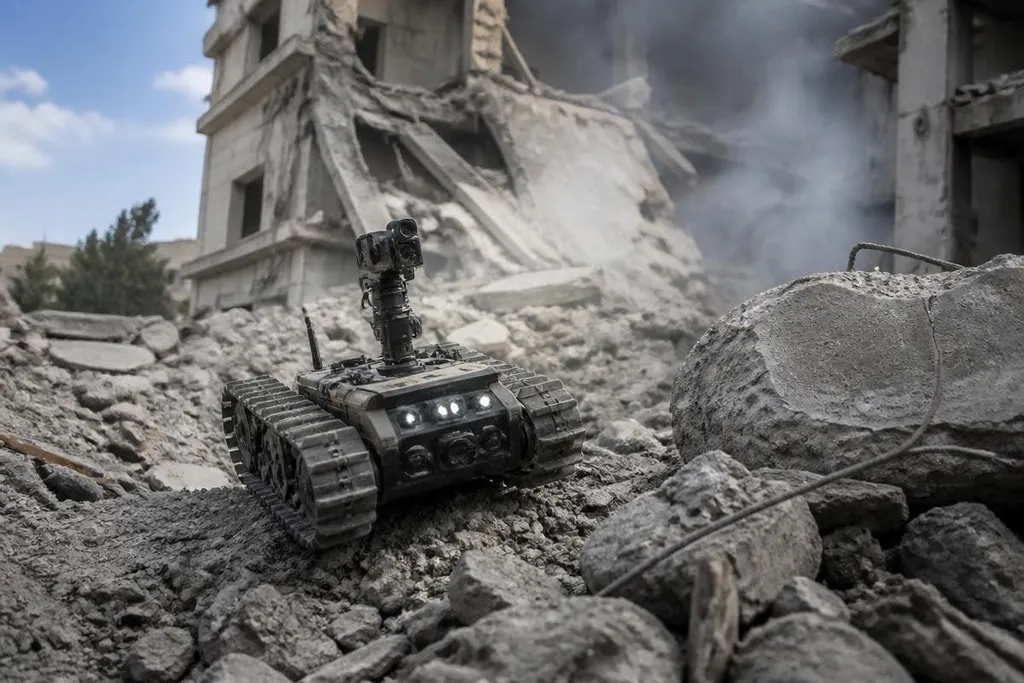
A rescue robot may need to cross loose rubble, enter a smoke-filled room, or inspect a narrow pipe before a responder goes near it. Its value comes from the way it moves, senses danger, and sends information back to the team outside.
- Tracked robots climb over broken ground and carry cameras into unsafe areas.
- Drones look down from above, while small robots inspect gaps and pipes.
- Operators still make many decisions when radio links, dust, heat, or darkness affect the robot.
Movement starts with the ground
Wheeled robots work well on floors, roads, and other firm surfaces. Rubble changes that. A loose pile can trap a small wheel or push a robot sideways, so rescue machines often use tracks, large wheels, articulated legs, or a mix of these designs.
Tracks spread the robot’s weight over a wider area. That helps it cross broken concrete and soft ground without sinking as quickly. Some tracked robots also use a front arm or flipper to lift the nose over a step, turn in a narrow passage, or move a small piece of debris.
Legged robots can place each foot on a chosen patch of ground. That helps when a clear path does not exist, but leg control takes more work. A foot can slip, the robot can lose balance, and the operator may need a clear view before sending it farther into the site.
Sensors turn a dangerous place into a map
The robot needs more than a live video feed. A camera shows what is in front of it, while LiDAR measures distance with laser pulses. Thermal cameras can show heat from a person, a fire, or a damaged electrical part.
Many robots combine these inputs to build a map. Simultaneous localization and mapping, known as SLAM, lets the robot estimate where it is while it records nearby walls, objects, and open space. Dust, smoke, reflective surfaces, and poor lighting can still reduce the quality of that map.
That limit matters during a search. The robot may reach a room and send back clear video, yet fail to detect someone behind a wall or under a heavy slab.
Rescue teams use the robot to gather evidence and guide their next move, not to treat every sensor reading as proof that a space is clear.
Control links decide how far it can go
A rescue robot can move farther than its operator can see, but the control link still has to reach it. Concrete, steel, soil, and damaged buildings can weaken radio signals. The robot may need a cable, a relay unit, or a route that keeps the signal open.
A tether can carry power and data into a tunnel or building. It also limits how far the robot can travel and may snag on corners. An untethered robot avoids that cable, though its battery and radio range set a hard limit on the search.
The air adds reach, but smoke, walls, and battery time still limit what a drone can show. Reports on rescue drones from Robot24.com can tie those limits to named aircraft, flight times, control links, and test sites.
Drones cover the space above
Aerial robots can inspect roofs, cliffs, flood zones, and wide debris fields without sending a person into the first search. Their cameras give teams a high view, while thermal sensors can help locate heat sources when normal video is poor.
Flight time remains a practical limit. Wind, rain, smoke, and blocked signals can shorten a mission or force the drone to stay close to its launch point. A drone can also miss a person hidden by a roof, tree, wall, or pile of debris.
Ground robots and drones often work as a pair. The drone checks the wider area, then the ground robot moves toward a route that looks safe enough to inspect. That split reduces wasted movement, though it still leaves the hardest decisions with the rescue team.
Before a team deploys one
A robot earns a place in rescue work when its limits are known before the alarm starts. Check these points during training:
- Ground type: Test rubble, stairs, mud, loose soil, and narrow passages that match the site.
- Sensor view: Confirm which cameras work in darkness, smoke, dust, and heat.
- Control range: Measure the radio link inside concrete, steel, tunnels, and underground rooms.
- Recovery plan: Set out a way to pull the robot back if it loses power or tips over.
- Operator load: Give one person enough practice to drive, read sensors, and report findings.
I'd choose a robot with a known recovery method over one with a longer claimed range. A machine that reaches a victim but cannot return may create another problem for the team.
The next useful step is not a bigger claim about autonomy. It is a field test that records where the robot loses signal, which surfaces stop it, and how fast the team can act on what it sees.